TPR warns against DB funding complacency
Trustees of defined benefit (DB) pension schemes have been warned by the Pensions Regulator (TPR) that it was “not the time for complacency” over scheme funding.
Publishing its Annual Funding Statement (AFS) for 2022, TPR cautioned that conditions remained challenging for some schemes and employers in the current economic climate.
The regulator called on trustees to continue to focus “on their long-term funding target and strategy” and be alert to the possibility of their scheme’s funding position, investments and covenant being more volatile and potentially changing quickly.
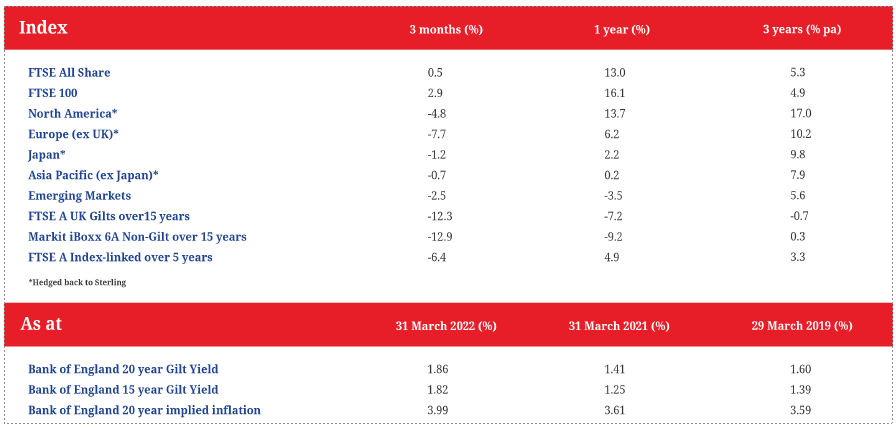
TPR Executive Director of Regulatory Policy David Fairs said: “Favourable investment conditions over the last three years mean that schemes’ funding levels are ahead of plan, but now is not the time for complacency.” He said that it may be a good time to seek “future protections” such as contingency plans and dividend-sharing mechanisms The latest AFS is for trustees and sponsoring employers of DB occupational pension schemes and is particularly relevant to schemes with valuation dates between 22 September 2021 and 21 September 2022 – known as Tranche 17 or T17 valuations.
The statement comes against a backdrop of what it said were high inflation, high energy prices, higher interest rates and slower economic growth, all of which, according to TPR, “may impact on their [trustees] pension scheme funding and employer covenant”.
It highlighted uncertainty over how the situation in Ukraine would evolve, and the impact it would have on the global economy, together with the “lingering effects of COVID-19 and Brexit” as broad risks that emphasised the importance of robust risk management across all areas of a scheme’s assets, liabilities and covenant.
Commenting specifically on T17, TPR said the actuarial valuation was an “opportunity for trustees to reconsider if funding plans are appropriate and effective monitoring mechanisms are in place”.
And the regulator outlined action it was expecting trustees to take, depending on the status of their particular scheme. Where schemes were in deficit against their technical pro-visions, trustees should focus on recovering the deficit and managing their risks.
Where schemes had recently achieved full funding of their technical provisions or were expected to do so soon, trustees should consider how their liquidity needs would change in the absence of future contributions from the employer.
They should also ensure that their journey plans remained appropriate and focussed on managing other risks through contingent funding plans linked to suitable triggers.
The AFS noted that TPR had seen an increase in employers re-turning cash to shareholders by restarting dividends, paying ‘special’ dividends and share buybacks.
Trustees were advised to be “alert” and consider whether their scheme was being “treated fairly” compared to other stakeholders.

Pension scheme administrators have been urged to en-sure they are regularly warning scheme members about the risk of pension scams.
The Pensions Regulator (TPR) issued the reminder as it pub-lished an updated version of a letter about scamming that it says should be sent to members who were asking to transfer their pensions.
The letter has been jointly signed by TPR, the Financial Con-duct Authority (FCA) and the Money and Pensions Service. It warns members who hand in such a transfer request about the risk of scams and the benefits of remaining in their existing pension scheme. The letter says pensions are “a safe, long-term investment” for members’ retirement and transferring is a serious decision and they should not “do anything in haste”.
It was originally just one of a number of checks and process-es recommended in TPR guidance for scheme managers that was published last November. In addition to highlighting the risks of transferring pensions, the recommendations included sending the ScamSmart leaflet or weblink to members and giving details of the ScamSmart website.
The guidance also suggested providing members of defined benefit (DB) schemes with a link to FCA information on transferring from a DB pension and adding scam warning messaging to scheme websites.

A plan by government to ensure pension scheme members are fully aware of the information and support that is avail-able to them when they want to access or transfer their pension came into force on 1 June.
The “Stronger Nudge to pension guidance” measures re-quire defined contribution (DC) pension scheme trustees and managers to refer such scheme members to Pension Wise, the government service that provides free and impartial guidance to those aged 50 and over who are thinking of accessing their pension benefits.
Members will have to accept the offer of an appointment with Pension Wise or confirm specifically that they are declining the guidance service before they can continue with the process. At an appointment, trained specialists will talk members through their options and help them to understand what their overall financial situation will be when they retire.
Routine part of the process
The offer of support, including facilitating the actual appointment, is to be presented by trustees and managers as a routine part of accessing pension savings, according to the Department for Work and Pensions (DWP). The “Stronger Nudge” referral is triggered by an application for accessing benefits or a communication in relation to an application.
Trustees and managers can decide at which stage of the process they give the “Stronger Nudge”. In response to comments that the referral would come too late in the pro-cess, the DWP said the original draft regulations had been updated to ensure trustees and managers could deliver the “Stronger Nudge” as early as possible.
Response to concerns
The measures are being seen as a response to industry concerns raised about the number of people who were accessing pension benefits without having or receiving any guidance or advice.
The DWP said in an updated response in January this year to a 2021 consultation that attracted 343 written replies from a range of individuals and organisations, that “the majority of responses strongly supported” the intention to increase the take-up of Pension Wise guidance.

According to the DWP, increasing the take-up will also help protect members from pension scams. It said the “Stronger Nudge” measures built on its work with the pension industry, regulators and law enforcement partners to pursue fraudsters and make sure people have the information they need to spot and report scams.
The implementation of the measures comes as new data from the Office of National Statistics show pension saving remained “resilient” during the pandemic, with total membership of occupational pensions up 7% on pre-Covid levels. This included an increase of 13% in private sector DC membership.
Our thoughts
MHM broadly supports the drive to ensure that employees better understand the pension scheme options available to them and to help them make the right personal decision. Such decisions should never be taken lightly as they can have a strong bearing on the financial circumstances of the scheme member in the years ahead.
If we did have an issue, it would be to flag up that, no matter how much information and support pension scheme trustees and managers make available to members, it is and remains a personal choice and, in the end, it is the member who has to take responsibility for the decision and not the trustees or managers.
That said, in the spirit of believing that communication is generally a good thing, we feel strongly that there is a good opportunity here commercially to engage with a group of people who are to some extent pension savvy as a way to help de-mystify pensions and show how decision-making can be less daunting.
Information and education are the industry buzz words right now and with many pensions options available, there is a lot to explain. We believe the industry should embrace these measures as a means of demonstrating our expertise and experience and the knowledgeable contribution that we can make to the process.